Quick Summary:
October’s National Financial Planning Month is a timely opportunity to revisit the habits and decisions that support lasting financial confidence. At Westhollow Wealth Management, we help individuals and families focus on personalized financial advice, steady progress, and long-term priorities rather than letting short-term market movements drive important decisions.
Market volatility can be unsettling, particularly when financial headlines, online commentary, and social media opinions seem constant. However, changing markets also reinforce the value of having a thoughtful financial plan that is built around your life, your goals, and the future you want to create.
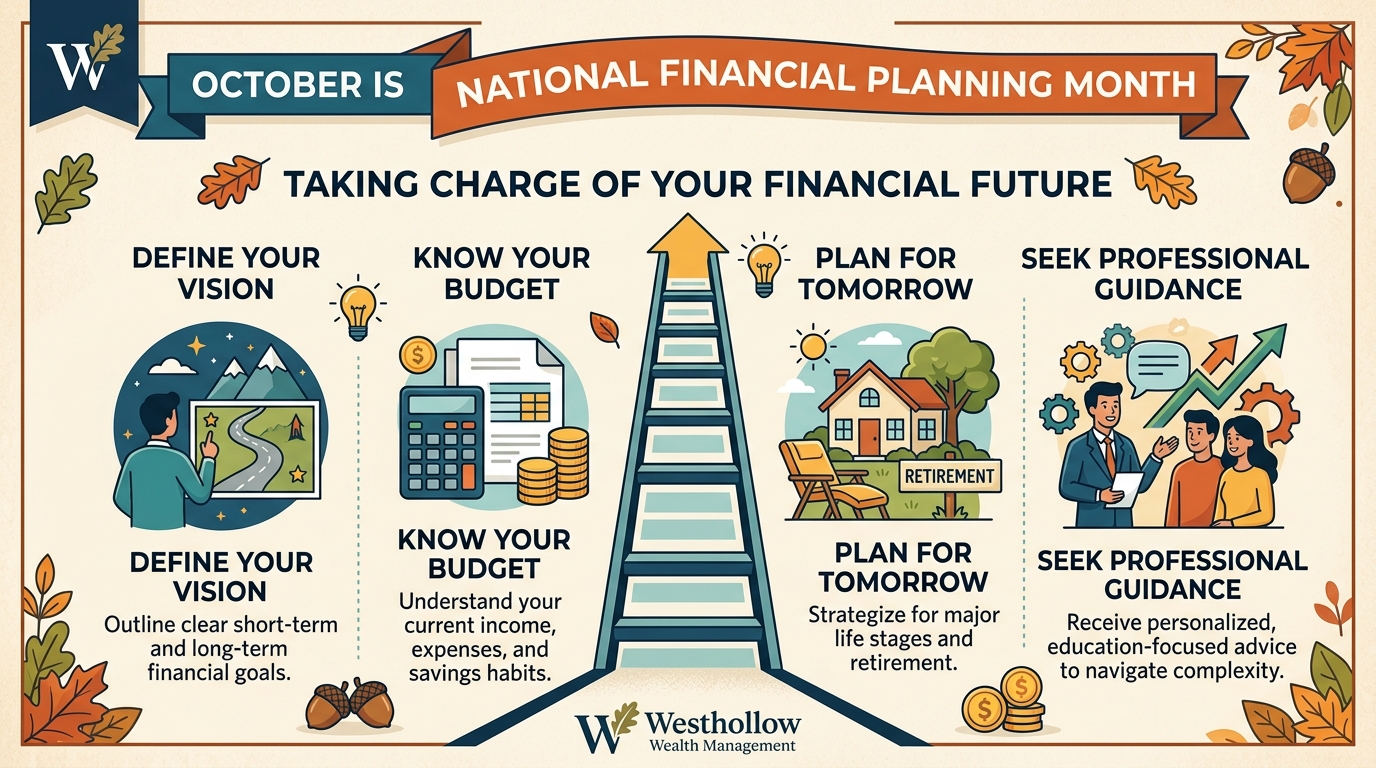
A sound plan is not designed to predict every market shift. Instead, it provides a clear framework for financial decision-making through a range of market conditions. During National Financial Planning Month, consider these seven fundamentals for remaining centered on your long-term financial goals.
Create a Financial Plan Around Your Life
There is no universal financial plan that works equally well for everyone. Your priorities, time horizon, comfort with investment risk, family circumstances, and overall financial position are personal, so your strategy should be personal as well.
At Westhollow Wealth Management, our holistic planning approach starts with understanding what matters most to you. Whether your focus is retirement planning, investing, building financial stability, or preparing for future changes, your financial plan should reflect your individual objectives rather than someone else’s strategy.
The most effective financial plans are not always the most complex. They are plans that make sense to you and that you can follow consistently. When your approach aligns with your goals and risk tolerance, it can be easier to stay committed when markets are strong as well as when conditions feel uncertain.
Keep Long-Term Goals in Perspective
Market declines and short-term swings are a normal part of investing. While volatility may feel uncomfortable, responding emotionally to temporary changes can pull attention away from the goals your financial plan was designed to support.
Retirement planning and other future milestones typically require a long-range perspective. Rather than allowing day-to-day market activity to determine your next move, it can be helpful to revisit the purpose behind your investment strategy and the timeline associated with your goals.
Maintaining that perspective is especially important when uncertainty rises. A long-term focus can help you avoid impulsive choices and remain connected to the strategy you created for your financial future.
Continue Saving and Investing Consistently
Consistency is one of the most meaningful habits in financial planning. Continuing contributions to retirement accounts and investment accounts through different market environments helps keep your strategy focused on the future rather than on trying to react to every change.
Regular saving and investing allow progress toward your goals to continue whether markets are rising or falling. Instead of attempting to identify an ideal moment to invest, a disciplined approach helps your plan move forward over time.
Consistent habits can also reduce the role emotions play in financial decisions. By following a plan that fits your circumstances, you can keep your attention on the bigger picture and your long-term financial priorities.
Use Diversification to Help Manage Investment Risk
Diversification is an important component of investment management. Spreading investments across different asset types can help manage risk while keeping your portfolio connected to your personal financial goals.
A diversified investment mix may include stocks, bonds, cash reserves, and other investments selected based on your objectives and comfort level with risk. Diversification does not remove market risk, but it can help reduce the impact of relying too heavily on a single investment or asset category.
It is also helpful to review your investment mix periodically. As your financial needs and long-term priorities change, your portfolio should continue to reflect the role it is intended to play within your broader wealth management plan.
Build a Strong Financial Foundation
Financial planning extends beyond investing. A clear understanding of your monthly budget, cash flow, and available savings can be just as important to your long-term financial stability.
Reviewing your spending and cash flow regularly can help you recognize patterns and identify opportunities to save. Maintaining an emergency reserve for unexpected expenses can also offer additional peace of mind when markets and other aspects of life feel uncertain.
Accessible savings can make it easier to handle short-term surprises without disrupting a long-term investment strategy. A strong financial foundation supports greater confidence in the decisions you make today and the goals you are pursuing for tomorrow.
Revisit Your Financial Plan Regularly
Your financial plan should be able to evolve as your life evolves. Short-term market activity does not always call for a change in strategy, but reviewing your plan at least annually can help ensure it still aligns with your current goals, needs, and risk tolerance.
It is also wise to revisit your plan after major life events. Changes involving your family, career, financial priorities, or retirement timeline may influence your long-term goals and deserve consideration within your overall strategy.
Regular reviews create an opportunity to evaluate where you are today while keeping your future direction in view. They can help keep financial planning, investment management, tax planning, and estate planning considerations connected to the larger picture of your life.
Partner With a Fiduciary Advisor You Trust
Volatile markets often bring an overwhelming volume of information. News coverage, financial commentary, and social media discussions can make it difficult to distinguish helpful guidance from distractions that may not apply to your situation.
Working with a trusted fiduciary advisor gives you a place to discuss your circumstances, questions, and financial goals with someone who understands your plan. At Westhollow Wealth Management, we provide education-focused, jargon-free financial coaching and personalized financial advice to help clients make informed decisions with greater clarity.
Instead of reacting to market headlines, you can focus on a financial strategy designed to support your long-term needs. Professional guidance can also provide reassurance during periods of uncertainty and help you remain disciplined as market conditions change.
Use National Financial Planning Month as a Fresh Start
National Financial Planning Month is a valuable reminder to take a fresh look at your financial life. By keeping your attention on long-term goals, saving consistently, maintaining diversification, reviewing your budget, and checking in on your strategy regularly, you can strengthen your financial foundation even when markets are unpredictable.
As a Milton, Georgia financial advisor, Westhollow Wealth Management helps individuals and families bring financial planning, retirement planning, investment management, tax-efficient strategies, and estate guidance together in a clear, personalized approach. If you would like to review your current plan or discuss whether it still reflects your goals, our team is here to help you navigate changing markets with confidence.